Photographer Gigi Glendinning generously volunteered her time and talent to document the lives of the NhRP’s clients—five female African elephants held captive by the Pittsburgh Zoo. On February 12, 2026, Gigi attended a hearing at the Allegheny Court of Common Pleas on the Pittsburgh Zoo’s Motion to Dismiss our case.
In this guest post, Gigi reflects on attending this hearing in person, and her subsequent visit to the Pittsburgh Zoo to document Angeline, Savanna, and Tasha. Her reflections, and the photographs she captured that day, offer a powerful glimpse into their suffering and why obtaining their freedom is imperative:
Attending the hearing in Pittsburgh was both hopeful and heartbreaking. I was grateful to be in the courtroom so Judge McGinley could see the public support for the elephants’ freedom, and I really thought she would allow the case to move forward. Especially when the zoo’s attorney repeatedly referred to the elephants as “property with no rights,” which to me, underscored the absurdity of their situation and strengthened my confidence that the writ deserved consideration. But when she began reciting legal definitions of “person,” my hope slipped away.
It was difficult not to feel defeated at that moment. Still, I remain encouraged by the NhRP’s commitment to the elephants and their plan to appeal. With each of the NhRP’s cases, we push the conversation forward and challenge the status quo.
After the hearing, I went directly to the Pittsburgh Zoo to see the elephants.
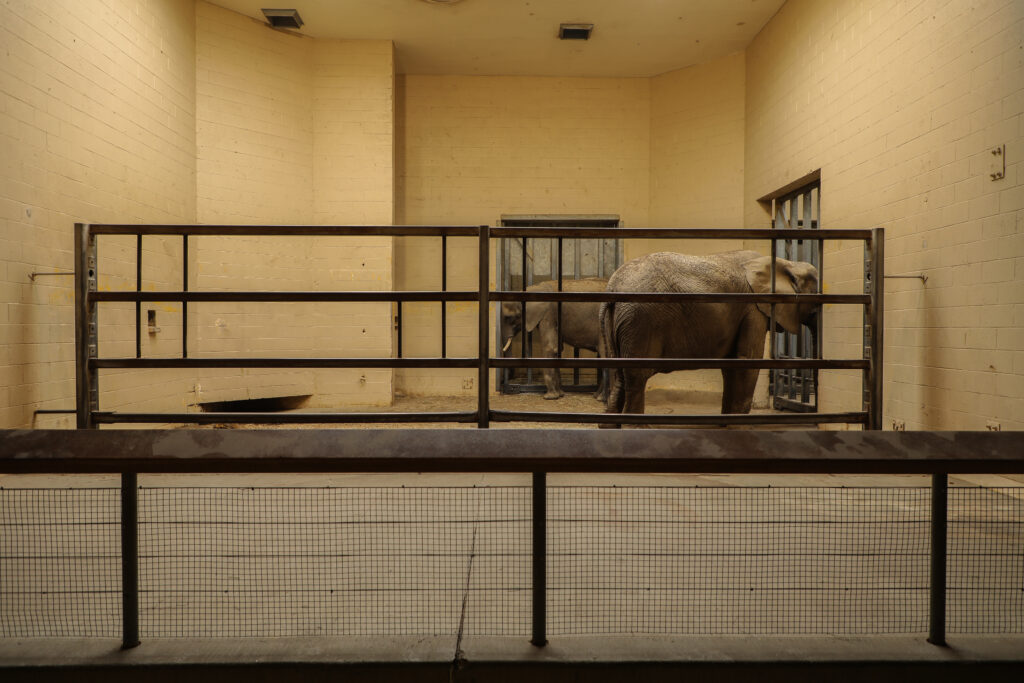
It’s astounding that we must argue in court to do what is clearly right. Decades of scientific research confirm that elephants suffer in captivity; no zoo, circus, or even sanctuary can fully replicate the complex social bonds, space, and autonomy elephants require. Yet the Pittsburgh Zoo continues to keep captive elephants and forcibly breed them, knowing full well the calves are destined to suffer in confinement their entire lives. That choice signals that this is not about care or conservation—it’s about sustaining their captive elephant population for display and revenue.
The Pittsburgh Zoo’s stated mission is “to make the world better for wildlife” by inspiring conservation action. But there is no clear evidence that viewing animals in captivity leads to meaningful conservation outcomes in the wild. How does confining Angeline, Savanna, and Tasha in a concrete room for months at a time fulfill that promise? How does watching an elephant pace or stand motionless against a wall inspire respect for wildlife?
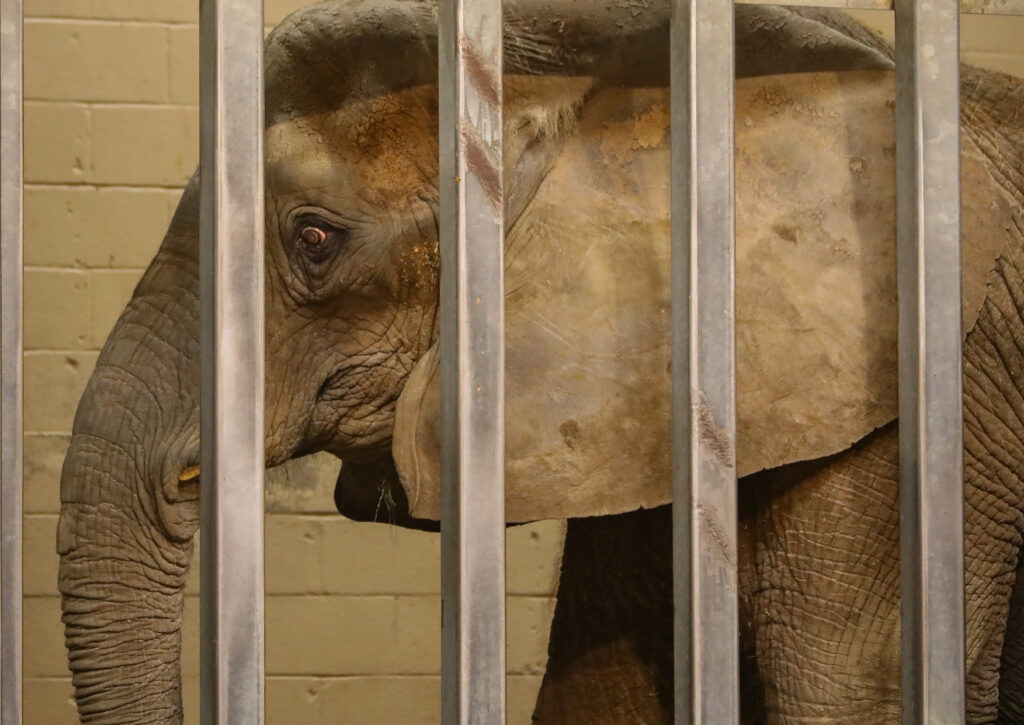
Programs like the AZA’s Species Survival Plan are designed to sustain captive populations, not restore wild ones. Meanwhile, reputable elephant sanctuaries have shown that public education and financial support can coexist with providing elephants expansive space, social companionship, and freedom from constant display.
Leaving the zoo that day, I felt the emotional weight of what I had witnessed—Angeline pacing, Savanna with her head pressed against the wall, Tasha shifting painfully off her front feet. It’s infuriating to witness and agonizing to walk away. The court’s decision was disappointing, but the moral clarity is undeniable. These elephants deserve better, and the fight for their right to liberty continues.
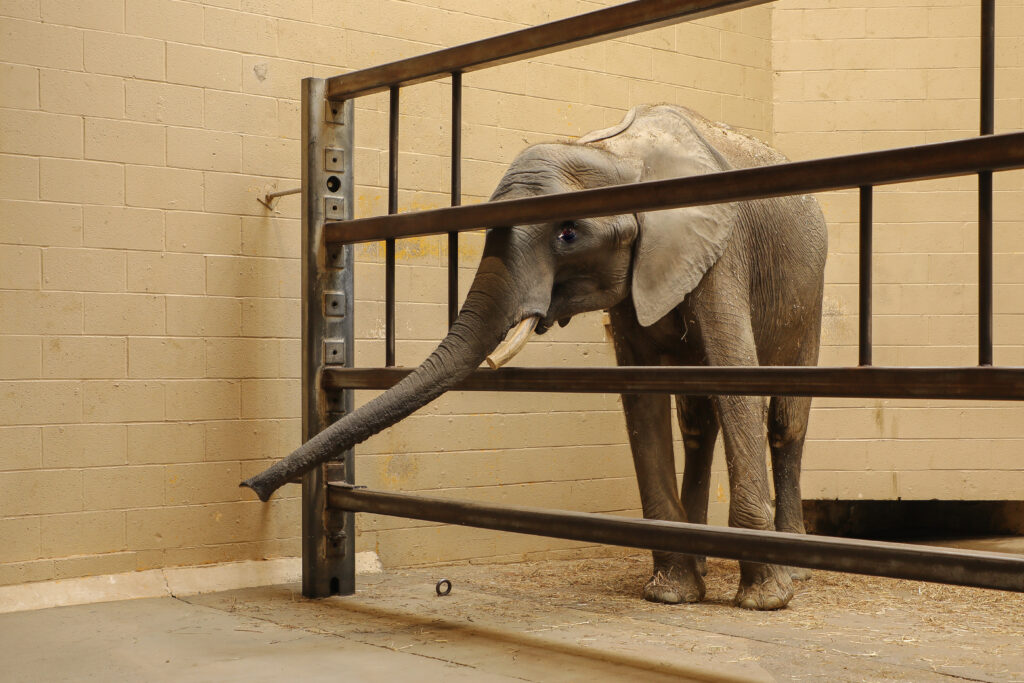
Thank you Gigi!
Photographs featured in this blog are by Gigi Glendinning.
They were captured on February 12, 2026 after the NhRP’s hearing at the Allegheny Court of Common Pleas on the Pittsburgh Zoo’s Motion to Dismiss our case on behalf of Savanna, Tasha, Angeline, Victoria, and Zuri.